Hainan 2026 Medtech Series #2: How Boao’s Real-World Data Pathway Actually Works
In my last article, I outlined why Hainan is becoming a strategic entry point for foreign medical device companies. Today, I want to unpack the mechanism that makes it truly unique: the Boao Lecheng real-world data pathway. For international medtech firms already holding CE marking or FDA clearance but lacking NMPA registration, this is the fastest route to building clinical credibility — and eventually, national market access — in China.
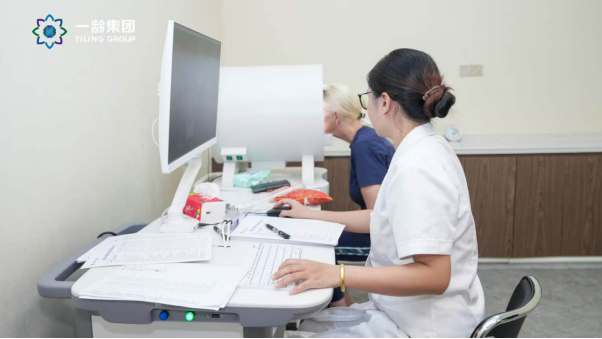
The core concept: use first, collect evidence, register faster
Normally, an imported device needs a full NMPA clinical trial in China before it can be sold. That takes time and capital — often millions of Euros and several years. Boao Lecheng offers a totally different pathway. Because the zone permits clinical use of unregistered overseas-approved devices, a manufacturer can partner with a Lecheng medical institution, treat real patients, and collect real-world data. That data can then be submitted to the NMPA as part of the registration dossier, potentially replacing or supplementing a domestic pivotal trial.
Beyond "clinically urgent": the precise qualifications
Many assume any CE-marked or FDA-cleared device qualifies. Not so. Hainan’s MPA (Medical Products Adinistration) and the NMPA apply a strict definition of "clinically urgent," set out in the Regulations on the Administration of Clinically Urgent Import of Medical Devices and Drugs in the Boao Lecheng Pilot Zone. For a foreign device to enter and later leverage real-world data for registration, the following must be met:
1. No domestically registered alternative – There is no NMPA-approved device that adequately treats, diagnoses, or prevents the same condition. If a comparable domestic option exists and is accessible, the import request is typically denied.
2. Valid overseas marketing authorisation – The device must hold current approval from a major jurisdiction (FDA, CE, PMDA, TGA). Original documentation is required, and use is confined to the authorised indication.
3. Serious or life-threatening condition – The intended use must target a condition that is fatal, causes irreversible organ damage, or leads to substantial bodily impairment, and where standard therapy in China is inadequate.
4. Significant clinical advantage – Even if a partial domestic alternative exists, the foreign device must demonstrate a clear superiority in efficacy, safety, or patient subset applicability, backed by published data.
5. Approved Lecheng institution as sponsor – The application must be made by a qualified hospital within the zone with ethics committee approval and a responsible physician.
6. Pathway selection – Individual patient use or batch import for a structured real-world data study. The latter is the route most manufacturers pursue for registration purposes.
How the process then unfolds
Once qualification is confirmed, the typical pathway follows six stages:
1. Partner identification – Formalise the relationship with the sponsoring Lecheng institution.
2. Application to Hainan MPA – Submit overseas approval, clinical data, ethics committee approval.
3. Use under medical supervision – Import the device duty-free; treat patients under RWD protocols.
4. Real-world data analysis – Structure and analyse data per NMPA’s Real-World Evidence Guidelines.
5. NMPA dossier submission – The RWE package supplements the registration application, potentially waiving a full domestic clinical trial.
6. National approval and market access – Upon NMPA clearance, sell across mainland China.
What this means commercially
I recently spoke with a regulatory lead who estimated a Boao RWD route could cut China market entry by 18–24 months versus a traditional trial — at a fraction of the upfront cost. The ability to generate local data while already introducing the technology to Chinese doctors and patients is a strategic move.
The fine print still matters
The quality of real-world data makes or breaks the submission. A poorly designed protocol or weak data governance will see the RWE package rejected. Partner selection is critical — not all Lecheng institutions have the same depth of experience with international manufacturers. And the "clinically urgent" criteria are assessed case by case; a well-prepared application with a clear statement of clinical advantage moves faster than a generic one.
Boao Pathway at a Glance — Qualification + Process
To qualify, your device must:
✓ Have no NMPA-approved equivalent
✓ Hold FDA/CE/PMDA/TGA clearance
✓ Address a serious/life-threatening condition
✓ Offer a significant clinical advantage
✓ Be sponsored by an approved Lecheng hospital
✓ Be imported under an individual or batch RWD protocol
Then:
1. Partner with hospital in Boao Lecheng
2. Obtain Hainan MPA approval
3. Import duty-free and treat patients
4. Analyse real-world evidence
5. Submit to NMPA
6. Gain national approval
In my next article, I'll examine how foreign medtech companies can go a step further — setting up local manufacturing in Hainan under the 30% value-add rule. For now, if you hold a CE mark or FDA clearance and are serious about China, the Boao pathway deserves a place in your regulatory strategy — not as a shortcut, but as a parallel track that can meaningfully accelerate patient access and commercial entry.
Author:
Ulla Nurmenniemi
Chairman, Wellbridge Ltd (Beijing & Haikou)
Vice Chairman, FinnCham China - Beijing




Submit Cancel